Showing posts with label efficiency. Show all posts

Saturday, 24 November 2012

Communications revolution or the death of conversation?


We have available to us an unprecedented amount of communication channels in both our Business and Personal lives. Take a casual inspection of a typical working desktop I would take a wager that you will see at least 5 distinct channels, all of which offering a way to communicate with a different audience, in a slightly different way. But are we simply talking more, and listening less?

There has been a lot of theorising in recent years about the ‘death of email’ as a previously indispensable Business tool for timely communication. Indeed the latest and greatest in Business collaboration offerings from Basecamp, Evernote, Google, and the like all extoll the benefits of a new kind of communication and sharing. So with a new forum here, and a collaboration portal there, we are presented with yet more subtly different channels in which to lay down our burden of information.

But what is the real basis of good communication?  Humans are social creatures of a somewhat awkward persuasion, making definitive answers to this difficult to achieve. One way to quantify a successful communiqué would be the efficiency in relaying information, which is something that many struggle with. To quote French Theologian Blaise Pascal (albeit in an English translation): “I would have written a shorter letter, but I did not have the time.” Brevity is the enemy of time and perhaps we just aren’t very good at explaining everything through one medium.

Another way of looking at the challenge is to examine the sheer breadth of our social output. When we speak to somebody face to face, it is said that upwards of 80% of what you actually say is non-verbal. Body-language, tone, expressions and stature all provide a rich subtext which makes mere words seem akin to shouting down a cup and string to deliver Opera. Perhaps we need 5, 10, or even 20 discrete channels just to exorcise our inner urge to explain what we think, and why we think it.
Whatever the reason for rapidly growing range of communication channels, we should think of them all as part of single pipe. Imagine your broadband line as not just a small bundle of cables, but of a rich braid of threads which you and your employees, are using to weave messages which fly off to their destination. To this end there is no use in attempting to narrow or stem the tide of communication options open to us, we must instead embrace it.

But this invariably is easier said than done. I was in recent discussions with my old Secondary School where I spent many years in what now seems like a very simple era. With no Facebook, Twitter, and very few Smartphones we revelled in the opportunity to get home and log in to the (now extinct) MSN messenger in order to chat with friends. Emoticons were still novel, and an acute representation of the clamour to better express analogue feelings through a digital pipe. So the individual motivation hasn’t changed, but the circumstances certainly have. The School in question has an unprecedented challenge in deciding which channels to boycott, manage, or even endorse in order to make communication between School and Students work. The challenge is no different for Businesses or even individual relationships, where the same message through different channels can have a significantly different impact.

So we face an exciting time, but also one that requires action. Your staff want to communicate, and like a trickle of water through rock, they will find a way. Surely better to show them the way by installing the kind of solution which you think best fits your Business and way of working? Otherwise there is the real danger that everyone will be shouting, and nobody will hear…

Saturday, 27 October 2012

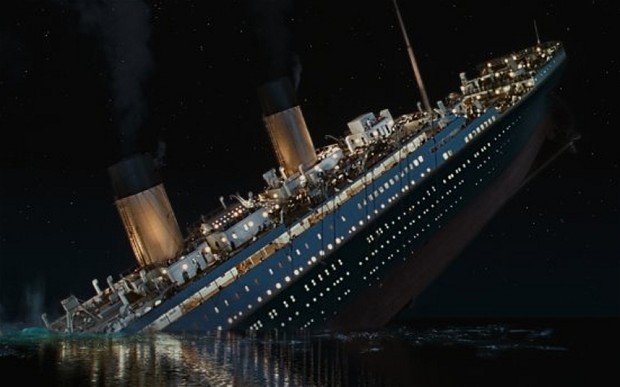
What really sank the Titanic?


On the anniversary year of one of the worst civil maritime disasters in our history, this question has undoubtedly been asked afresh by families, engineers, sailors and critical thinkers alike.
Pose this question to a group of your friends or colleagues and a little thinking will betray a plethora of answers tracing up and down the chain of cause and effect. “It was the poor training of crew” those with a people disposition will cry, “It was poor quality Iron rivets” the engineers will theorise. My own answer is that fundamentally it was the bulkheads of the ship which allowed its demise.
There is a churning sea of problems and potential pitfalls in our endearingly chaotic world. We ultimately navigate it to the best of our seaworthiness and in fact the very fact that it isn’t plain sailing is the reason why we can enjoy challenges and the success which triumph will bring, either in our personal or business lives. The reason that I settle upon the 16 supposedly watertight bulkheads of the Ocean class liner being responsible for the sinking and loss of life is that the ship was always going to be exposed to many dangers in such a voyage. Even the consideration of the need for life jackets, lifeboats, bulkheads and sealed doors betrays the acknowledgement that something can always go wrong.
I argue that it was not something as striking as an iceberg, or as immediate as negligence of the crew, but the failure of the main thing which would have mitigated the damage that was responsible (whether or not that damage was avoidable). We all have to sail into choppy seas, and I believe the best preparation is to build your business with bulkheads from day one.
So what does this mean in real terms? Well the theoretical concept of dividing a ship to protect the whole from localised incidents, is what I am eluding to. By taking the time, effort and consideration to create watertight cells within your business you are building a ship which is prepared for peril, but not prone to disaster. An example of this is to set systems which are the lifeblood of your business beyond reproach. Email for instance is now the lifeblood of both internal and external communication for a vast proportion of UK businesses. Historically it might have been perceivable that a small amount of email downtime would be shrugged off by the momentum of the rest of your Titanic, but more recently, downtime of anything which is so fundamental for all aspects of your business is unlikely to stop flooding your ship once it starts.
Another example is training of your staff. Morale is of course critical in keeping your business on message and on track for your objectives whatever they may be. So when one unhappy member of staff leaves, or worse sticks around and sows seeds of discontent, you don’t want a seeping spread of their mentality into otherwise sound neighbouring components. So we forge a strong company ethos, and engage all the staff within it. This is exactly what I mean when I say that an “unsinkable” business will be compartmentalised, with each being considered a strong and structurally sound unit in its own right.
Taking this approach from day one is the way to feel a sturdy ship beneath your feet. You will have the confidence that the choices made and the materials forged have been used in a way that does not leave you exposed to one section flooding the rest. There will always be icebergs, and there will always be incidents, but with your bulkheads set firm then you should stay afloat. What really sank the Titanic?

Thursday, 24 March 2011

Learning not to shout


I once had a teacher who made it his mission to never shout (lets call him Mr W). He would stare down situations which would drive lesser Academics to despair with a steely determination not to lose his cool. When his colleagues would have resorted to chastising and blasting students, he managed to achieve the net result of quality teaching delivery without ever threatening his presumably single figure blood pressure readings. It is surprising how regularly I have considered this small stand in the tumultuous seas of adolescent learning in the days since I was taught by this man. I can only assume that there was some inherent resounding logic which has encouraged me to carry his mantra to this day.

It led me to thinking about the amount of noise in our normal operating environments. Industry will tell you that if you aren't shouting louder than your competitors then you are likely to fall into the oblivion of customer indifference. I propose to you an alternative. Perhaps you shouldn't be shouting at all. Perhaps you should instead be choosing a quiet room where you can make your pitch to the customers in a natural, reasonably paced tone of voice which expresses not only your company mission but your natural predisposition for doing Business. Nobody wants to sit in a meeting room with white noise and megaphones in the background, so why do we put up with it in the sales and acquisition process?

There is a great blog (and organisation) which embodies the mantra of shouting smart, not loud. 37Signals (http://37signals.com/) provide a range of web-based collaboration apps for Businesses to handle their operations. Even more practical than this however is their blog, 'Signals versus Noise" http://37signals.com/svn) with excellent day-to-day tips on tackling life's little challenges without ever losing your cool.

Whilst there will always be competition in your chosen sector of Business my message is this. You can easily spend infinite amounts of resource and energy competing in an escalation of One-upmanship with your competitors. However much like a heated legal battle where the only winners are lawyers, you might find that the only people laughing in the aftermath of the battle are Google with their Ad-words and third party marketing organisations with ever inflated budgets.

Instead why not try to take the example of Mr W and keep your voice quieted. If you happen to stroll into a crowded, noisy room, why not step back and review. Would you be better off changing your spots and entering another room where the background noise is a little less debilitating.

If only it were so easy I hear you cry! Well I appreciate that every Business would probably love to find a quiet room full of receptive punters, however just acknowledging that they exist is the first step towards capitalising on a less frantic revenue stream. A slightly unfortunate illustration is Jamie Oliver's most recent Social Experiment with school drop outs being educated by national experts in various disciplines (http://www.jamieoliver.com/news/jamie-sends-last-chance-teens-to-his-dre). A great idea you might think, unfortunately however the majority of episodes to date have essentially seen an intellectual heavyweight being battered into submission by mobile ringtones and playground banter. The two parties are no longer communicating, they are simply shouting past each other, with the net effect being a train wreck of frustration and wasted energy.

So what can be done to avoid a similar situation in your Business? Well my argument would be that taking a moment to re-open your ears and acknowledge the cacophony of noise around you is the first step towards finding a lucrative Business niche where you no longer fight competitors, you instead pass right through them only to find their vocal protests fading into a distant hum.

Tuesday, 1 February 2011

The curse of Technological lobotomy


Every day I get emails telling me about the next amazing feature of X, or new release of Y. I like to dabble in some of the muddier ponds of technology available in this fine age so you could say that I am looking for trouble by continually scouring the internet for the next gadget or software trick to double efficiency. I'm sure many of us can relate to this in some degree, as it would seem that Business and Personal lives are inescapably governed by what technology allows us to do.


My question is, are we really working smarter and faster? Or does every auto-complete or keyboard short cut make us that little bit stupider?


The age-old head slap moment where you forget to attach a file to that all important email. I sat down to compose on my Gmail account yesterday and intended to send an attachment to a colleague. Upon clicking "Send" I was politely informed by Gmail that I "had used the word 'attached' in my email, but I had not attached a file". Now at first I was heartened by this gentle, if slightly condescending remark. Much like the firm reminder from a Primary School teacher that writing primarily in crayon was not going to cut it when I moved on in life. Don't get me wrong, I like this feature, what concerns me is that next time I will kick back and let the computer check for my mistakes. With nothing but a red underline or a last minute warning message screening us from professional embarrassment, how long before we fall foul?


The branding trend of slipping in the term "Smart" could be a bit of a misnomer. 'Smart cars' promise a revolution in city transport and assist those who struggle with space or parking (http://tinyurl.com/63a34b3). 'SMART' interactive whiteboards with interactive touch screens and virtual pens profess to aid presentation skills and bring media together to improve teaching effectiveness (http://tinyurl.com/5sfkxjh). Voice dialling on now ubiquitous 'Smartphones' claim to alleviate the tiresome need for us to use our hands. So the general consensus seems to be that if we bolt on certain technology, then we become smarter in the way we work?


Well my argument would be that we are wandering a fine line. There are 3 camps who I would suggest most people fall into. First your non-adopters and your technophobics. (Laggards, your elderly father who still doesn't trust radio waves let alone iPads). Second you have those who take what they are given and pick up gadgets and efficiency tricks as they become common place and not before (Late majority, your average mobile phone user who dabbles with apps and downloads). Thirdly you have your gadget hunters who go out of their way to find "Smart" ways of getting the job done (Early adopters, like your mate Dave who regularly presents you with something flashy and largely useless, but nevertheless admirable). The more you gravitate towards the third camp, the greater the risk of what I call Technological lobotomy.


Being of the third order camp myself I do hope that I will retain my mental faculties long enough to reach retirement. However I fear there is a good chance me and many others will wind up drooling in a lazy-boy with only a tablet PC and a VR headset for company if we let computers do too many things for us without thinking. A fellow blogger also points out that technology fundamentally allows us to be physically unfit in everyday life which should also be thrown into the mix (http://wooga.drbacchus.com/technology-makes-us-dumber).


If you are concerned about your rapidly declining IQ as you read this, fear not, simply perform this test: When you next write an email, turn off the spellcheck and see if you can still formulate basic words and sentences. If you are horrified by the results then a brief spell of Neo-Luddism might be in order (http://tinyurl.com/ycnj9n9)


**Update 2/1/11: Nukes and babies protected by AI: http://tinyurl.com/5rcs4vt
**Update 5/2/11: Good software = stupid? http://www.bbc.co.uk/news/technology-11263559

Sunday, 23 January 2011

Eating frogs and working smart

I am currently embroiled in the University-wide joy that is the exam period. The library is full and the campus is occupied mostly by people who look like they've had a few too many coffees and not enough sleep. Stand still for more than 30 seconds and you will invariably here the low drone of nervous candidates discussing their various exam hurdles and how best to tackle them without coming a cropper.


Personally I think it is all a bit silly, and I have a question for all those currently tearing their hair out. How much time do you spend working and how much time do you spend stressing? All too often people seem to think that hunching behind a mound of paper and hastily assembled text books will allow them to magically absorb a wealth of required information. Lever arch folders become shields and post it note deployment becomes a strategic art form.


What should we really be doing? Well my argument comes back the old adage of "Working smart, not hard". Ever had someone in your class or office who manages to turn up with minutes to spare before a deadline or meeting and pull together what you consider to be a "fluke" in the form of a brilliant performance. If you look a little closer, chances are it was no fluke, they simply work on a plane of efficiency most of us don't even know exists.


Today's alchemy is turning time into gold. It is sitting down and bashing out a piece of coursework after just the right amount of further reading. It is pulling together a powerpoint a few hours before the meeting which looks polished but is still fresh in your mind. And to all those who are currently revising, I say that efficiency is starting your revision early, and stopping not when you get bored, but when you feel full. Not to be confused with a food coma from late night pizza binging in University Libraries during the wee hours, I am referring to that feeling where you stop learning new information and start clinging to books like a life-ring.


From my experience in business the old 80-20 rule is king. If you are a half decent worker then you will get most of the way there in your initial foray into a task. Time spent after this tipping point (which in truth I think most people could identify if they stopped to think) is often wasted and it provides sod all in the way of added value. Without doubt one of the best things you can do is learn to "Eat your frog" as Brian Tracy suggests: (http://tinyurl.com/6fbcqmk) 


I appreciate of course that there are an intangible amount of approaches when it comes to working efficiency, but why not do yourself a favour and take 10 minutes out of your revision to read this, your new bible: (http://www.wikihow.com/Work-Smart,-Not-Hard)